
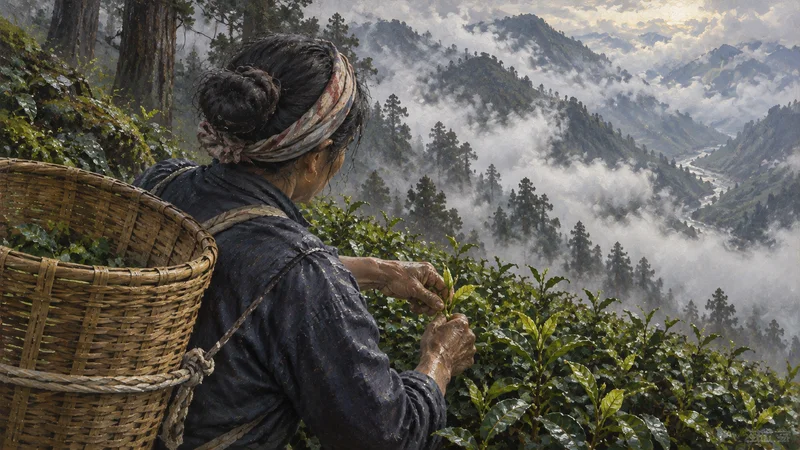
The Zengwen River begins in the Alishan mountains and travels 138.5 kilometres across southwestern Taiwan before reaching the Taiwan Strait. Its estuary is broad and low. Its first water, however, gathers in steep forest, cloud and tea country.
That upstream setting is the connection between river and cup. Alishan oolong is not grown along one neat riverbank, and the name covers gardens across Alishan, Meishan, Fanlu and Zhuqi. But the river rises inside the same mountain system whose elevation, mist and short periods of direct sun define Taiwan's high-mountain tea.
A river that starts above the cloud
Taiwan's National Park Service describes the Zengwen as the island's fourth-longest river, with a drainage area of 1,176.7 square kilometres. From Alishan Township it runs through Tainan and into the sea at Taijiang.
Near the headwaters, the scale is intimate. A National Park profile of Tapangu, one of the Tsou communities of Alishan, places tea and other mountain crops beside forest and the source streams of the Zengwen. The river is therefore more than a line on a map: it joins high Indigenous country, cultivated slopes, reservoirs, plains and estuary.

What high-mountain tea means in Taiwan
High mountain is not simply a romantic label. Taiwan's Tea and Beverage Research Station describes high-mountain oolong as tea grown above 1,000 metres. It names Alishan and neighbouring Chiayi districts among the principal production areas.
At that height, cooler air, morning and evening fog, and fewer hours of strong direct sun slow the garden's rhythm. The station associates those conditions with softer, thicker leaves and a finished tea that places fragrance and sweetness ahead of force.
Alishan is a region, not one estate
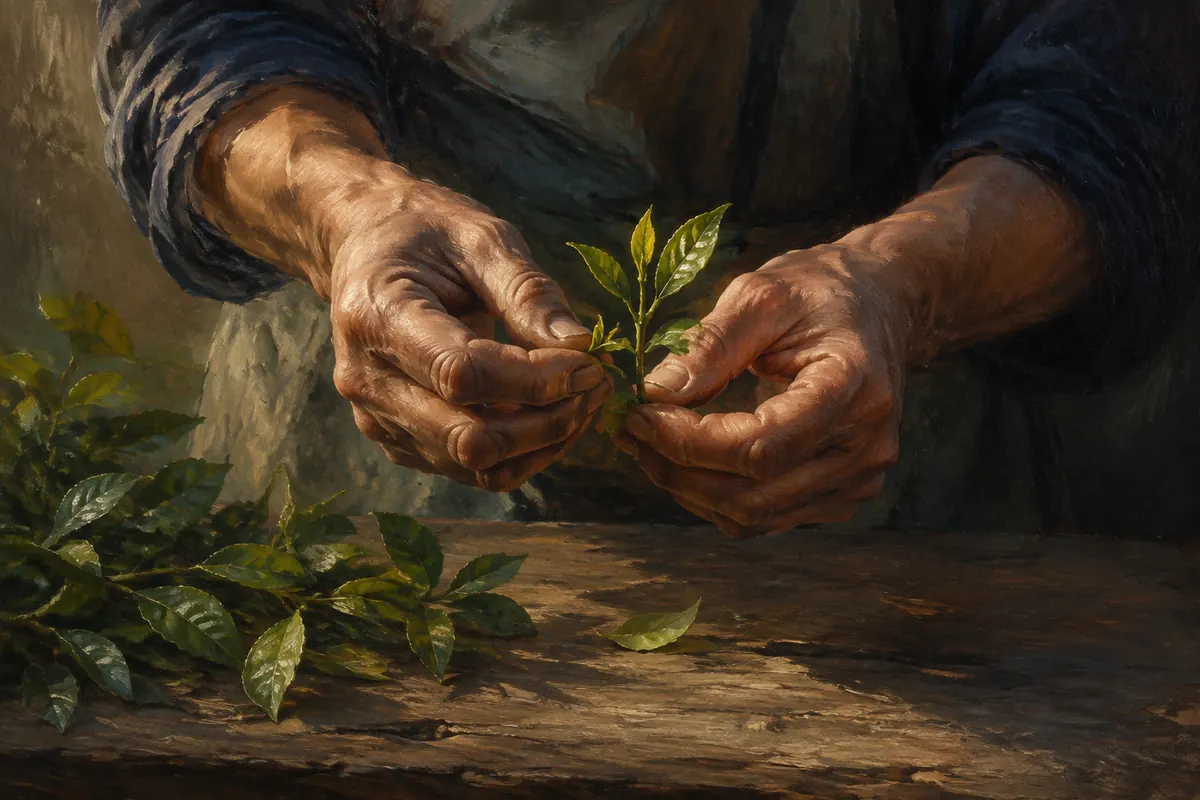
Greater Alishan tea can come from several townships and many independent gardens. The official tea station groups Meishan, Zhuqi, Fanlu and Alishan Township under the Alishan high-mountain tea area. Elevation, slope, cultivar, season and the maker's decisions still vary inside that name.
Two cultivars appear often. Qingxin Oolong is a long-established Taiwanese variety valued for fragrant oolong, while TTES No. 12, commonly called Jin Xuan, is another important high-mountain tea plant. Taiwan's tea station notes both in its work on tea-origin identification. Cultivar is useful information, but it does not replace a precise growing place or harvest.
How the leaf becomes a rolled oolong
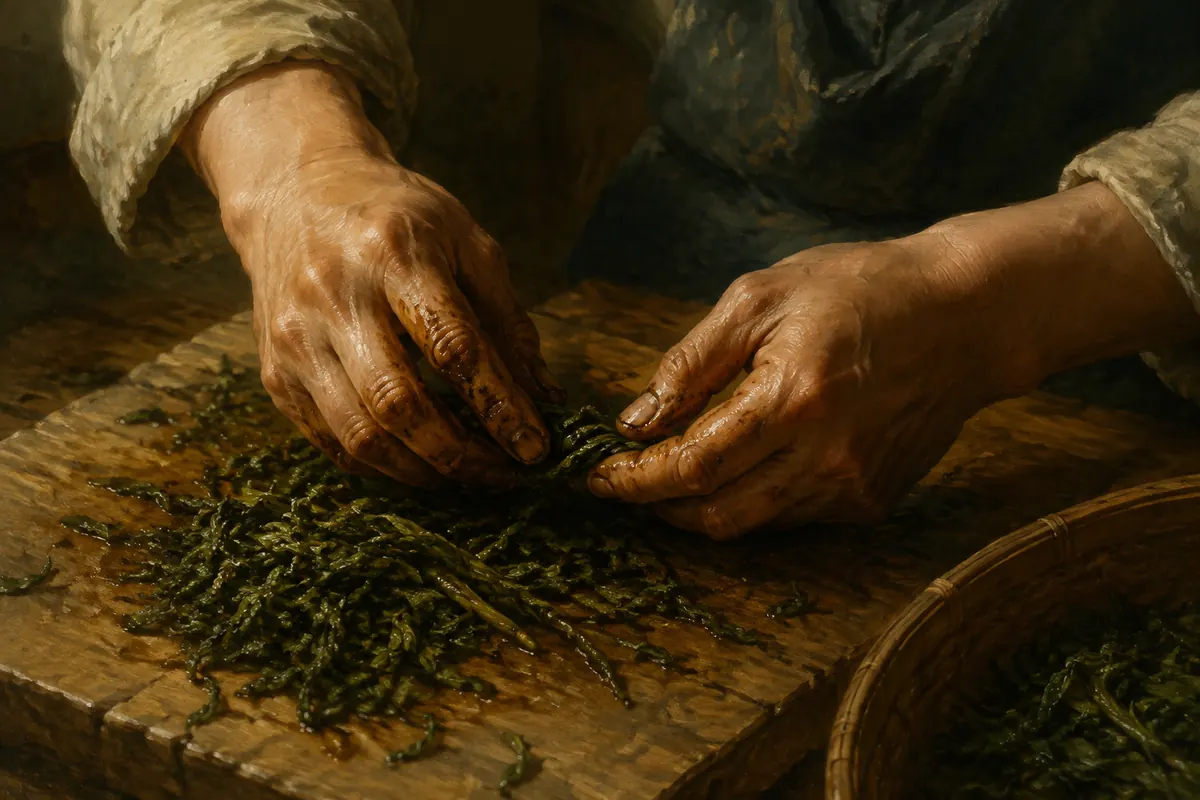
Alishan high-mountain tea is usually a lightly oxidised, tightly rolled oolong. Fresh leaves are first withered in sun and indoors. They are gently stirred so their edges bruise and begin oxidising, then heated to stop that change before rolling and drying.
The repeated rolling gives the finished tea its compact ball shape. Those small pellets are not tiny leaves: in hot water they open into broad, supple leaf and stem sets. The official process summary from the Tea and Beverage Research Station lists solar withering, indoor withering and stirring, panning, mass rolling and drying.
What Alishan oolong tastes like
The station describes the liquor as honey-green or honey-yellow, with a smooth, sweet, mellow and brisk taste and delicate fragrance. Floral, creamy, fresh-green and soft fruit impressions are common tasting language, but no single note belongs to every Alishan tea.
Roast matters too. A very green, lightly baked example can feel lifted and floral. More baking may bring warm grain, biscuit or nut tones. Neither is automatically more authentic; the useful question is whether the leaf, oxidation and roast feel balanced in the cup.
How to buy Alishan tea
Start with traceability. A package that says only high mountain oolong gives less information than one naming Alishan, a township or village, cultivar, season and producer. Taiwan's premium-tea information system explains how origin and production records can be connected through official traceability tools.
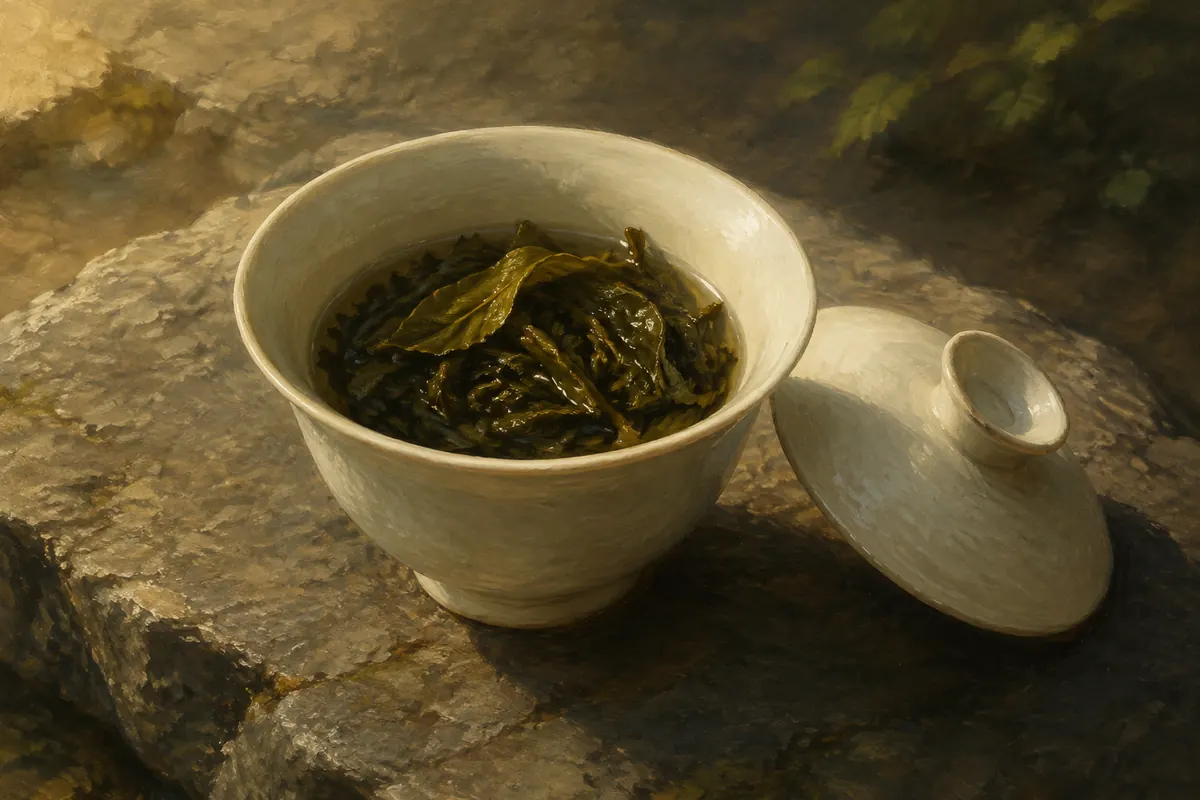
Inspect the dry leaf. It should be cleanly rolled rather than powdered at the bottom of the bag, and it should smell fresh rather than heavily perfumed or stale. After brewing, the pellets should unfold substantially. Judge the cup across several infusions: good rolled oolong usually reveals its structure gradually rather than spending everything in the first pour.
How to brew it
For a large cup, begin with 4 to 5 grams per 250 millilitres, water around 90 °C and a two-minute infusion. If the tea feels thin, add leaf before adding time. If it turns coarse or drying, shorten the steep or cool the water slightly.
In a small pot or gaiwan, use about 5 grams per 100 millilitres and begin around 25 seconds, adding time over successive infusions. Leave enough room for the rolled leaf to open. A cramped tea ball hides one of this tea's most useful clues: the condition of the full leaf.
What the Zengwen contributes
The Zengwen does not explain every flavour in an Alishan cup. The gardens occupy different slopes and tributary catchments, and the maker's work after picking is decisive. The river's value is geographical: its headwaters identify Alishan as living mountain country rather than a floating brand name.
Follow the river downstream and the landscape opens toward reservoirs, farms, cities and tidal wetlands. Follow it upward and it disappears into cloud, forest and tea. Alishan oolong begins at that upper edge, where a tightly rolled leaf carries a mountain's cool, fragrant register into the cup.
Frequently asked questions
What is Alishan high-mountain oolong?
It is a lightly oxidised, tightly rolled oolong produced in the Greater Alishan tea area of Chiayi County, Taiwan. Official Taiwanese guidance places high-mountain tea gardens above 1,000 metres.
What connects the Zengwen River to Alishan tea?
The Zengwen rises in Alishan Township, within the same mountain landscape where high-elevation tea is grown. The river is a geographical link to the region, not a claim that every Alishan garden sits directly on its bank.
What does Alishan oolong taste like?
Typical examples are fragrant, smooth and sweet, with honey-green to honey-yellow liquor. Floral, creamy, fresh-green and soft fruit notes are common descriptions, but cultivar, season, garden and roast all change the cup.
Which tea cultivars are used in Alishan?
Qingxin Oolong and TTES No. 12, widely known as Jin Xuan, are two important cultivars. A cultivar name is useful buying information, but it does not by itself verify origin or quality.
How should I brew Alishan oolong?
For a large cup, start with 4 to 5 grams per 250 millilitres at about 90 degrees Celsius for two minutes. For a small pot or gaiwan, use about 5 grams per 100 millilitres and begin near 25 seconds, increasing later infusions.
How can I tell whether an Alishan tea is well identified?
Look for more than the phrase high mountain. Useful details include Alishan or a specific township, elevation, cultivar, season, producer and a traceability record when one is available.
